How Much Does EV Charger Installation Cost in Sacramento?
What Affects the Cost of Installing a Home EV Charger?
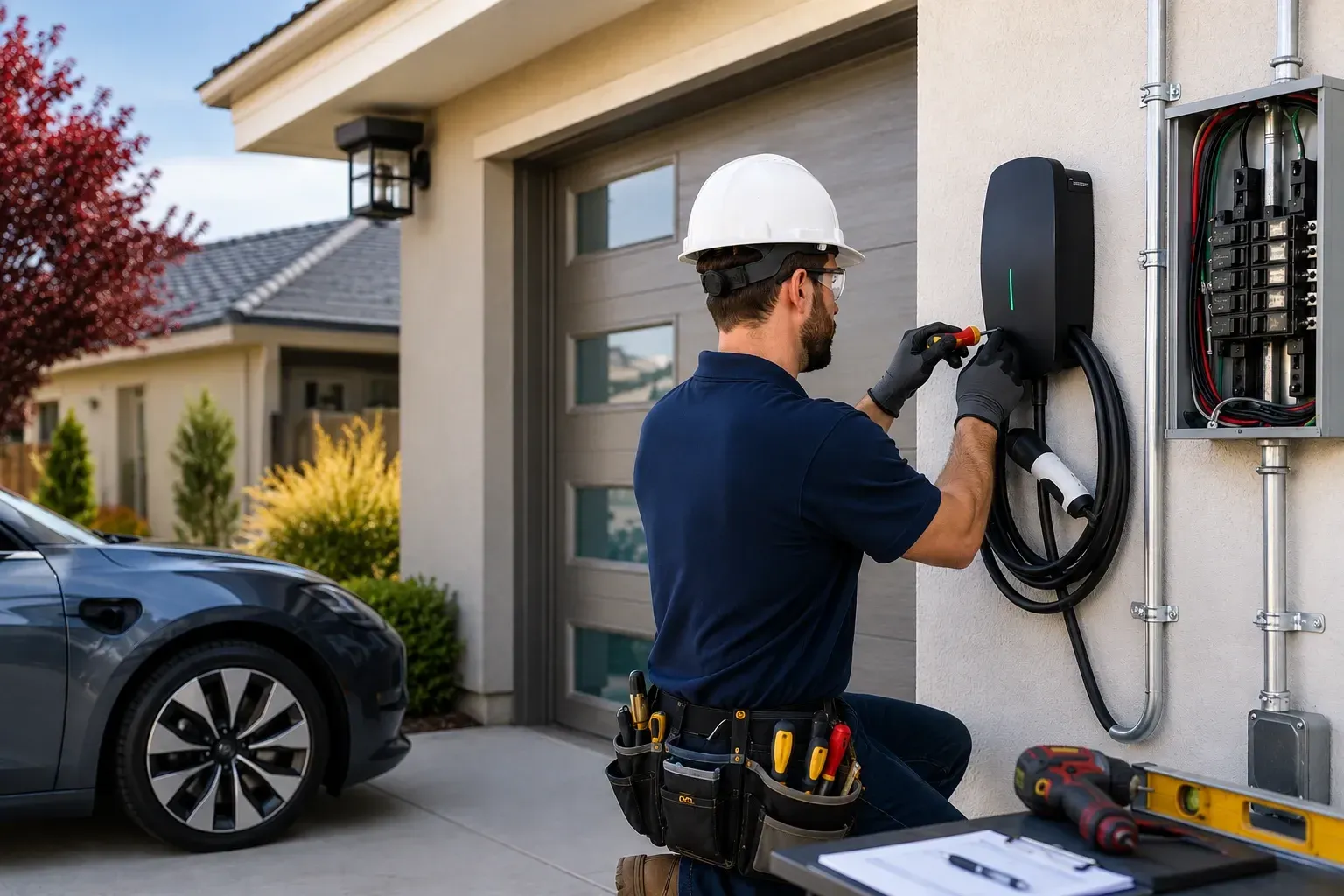
The cost of installing a home EV charger in Sacramento can vary considerably from one home to another. While the charger itself is an obvious expense, the complete installation may also involve a dedicated electrical circuit, wiring and conduit, permits, and other electrical work depending on the home's existing system and the location of the charger.
A straightforward installation in a home with sufficient electrical capacity and a charger location close to the electrical panel may involve less work than an installation requiring a longer circuit run, electrical upgrades, or a more complex mounting location. Whether the charger will be installed indoors or outdoors can also affect the equipment, materials, and installation requirements. The type and power requirements of the charger can further influence what is needed.
Because every home and installation is different, a single price or broad cost range can be misleading. Understanding the factors that influence installation cost gives Sacramento homeowners a better way to evaluate their project, compare options, and know what questions to ask before work begins.
The EV Charger Is Only Part of the Installation Cost.
The cost of the EV charger itself is separate from the cost of installing it. Charger prices vary based on the equipment and features selected, while installation cost is driven primarily by the electrical work and site conditions required to put that charger into service.
A Level 2 EV charger typically requires a dedicated 240-volt circuit. Depending on the installation, that may involve a new circuit breaker, appropriately sized wiring, conduit, mounting hardware, and other electrical materials. The charger's power requirements and the home's existing electrical system both influence what is needed.
Where the charger will be installed can make a substantial difference as well. A location near the electrical panel may require a relatively short circuit run, while greater distances can mean additional wiring, conduit, and labor. Finished walls, difficult access, detached garages, and outdoor locations can add complexity. Permits and inspections may also be part of the project, and additional electrical work may be necessary if the home's existing system cannot support the planned charging load.
This is why the price of the charger alone says relatively little about the cost of the complete project. Looking at the charging equipment, electrical requirements, installation location, and condition of the home's electrical system together gives homeowners a much better basis for understanding the work involved and comparing installation options.
Your Electrical Panel Can Have a Major Impact on Cost.
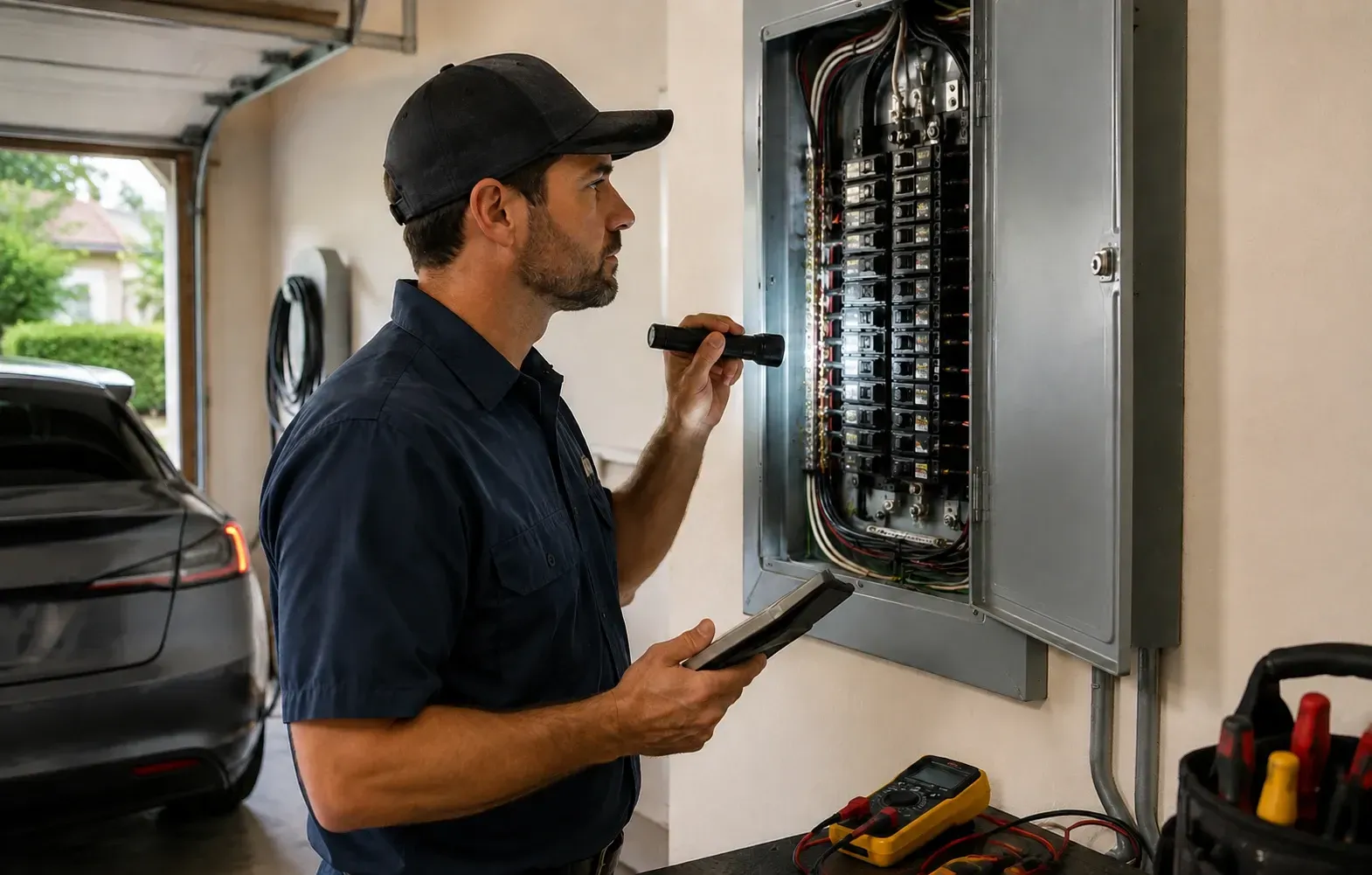
Your home's electrical panel is one of the most important factors in determining the scope and potential cost of an EV charger installation. Before adding a Level 2 charger, the electrical system should be evaluated to determine whether it has sufficient available capacity for the additional charging load.
For some homes, the existing electrical system may already have the capacity and appropriate panel configuration needed for the new charging circuit. In that situation, the electrical work may be relatively straightforward. In other homes, limitations in the existing system can add work to the project and become a significant installation-cost factor.
The age or size of the electrical panel does not by itself determine whether an upgrade is necessary. Existing household loads, available electrical capacity, panel condition and configuration, and the power requirements of the planned charger all contribute to that decision. An open breaker position alone also does not confirm that sufficient electrical capacity is available.
If the electrical system cannot support the charging configuration initially considered, a complete panel or service upgrade is not necessarily the only option. Depending on the home and charging needs, a lower-powered Level 2 configuration or an appropriate energy or load management solution may be worth considering. In other situations, electrical upgrades may be the appropriate solution.
These differences are why two otherwise similar EV charger installations can have very different electrical costs. Identifying what the home's existing system can support—and what, if anything, needs to change—provides a much clearer picture of the installation before the project moves forward.
Distance Between the Electrical Panel and Charger Matters.
The distance between the electrical panel and the planned charger location can have a noticeable impact on installation cost. A charger installed close to the panel generally requires less wiring, conduit, and labor than one located on the opposite side of the home or in a detached structure.
Distance is only part of the equation. The route between the panel and charger can be just as important as the number of feet involved. Wiring may need to pass through finished walls, attics, crawl spaces, garages, or exterior areas, and obstacles along that route can increase the materials and labor required.
Detached garages and other remote parking locations can add another level of complexity. Depending on the property, reaching the charger may require exterior conduit, underground routing, or other electrical work. A relatively direct route across an attached garage can therefore be quite different from reaching a charging location elsewhere on the property, even when the distances do not appear dramatically different.
Cost should not be the only consideration when choosing the location. The charger needs to work well with where the vehicle is normally parked, the location of its charging port, cable reach, and possible future vehicles. Cable placement should also minimize everyday tripping hazards and avoid creating an awkward path through walking areas. The best location balances a practical circuit route with safe, convenient charging for everyday use.
Charger Power and Installation Type Affect the Project.
The power requirements of an EV charger can affect both the electrical work and the cost of installation. Level 2 charging is available at different power levels, and a higher-powered configuration generally requires a circuit designed for the greater electrical load. The vehicle's charging capabilities, the homeowner's needs, and the home's available electrical capacity should all be considered when deciding how much charging power is appropriate.
More power is not automatically better. A vehicle can accept only as much AC charging power as its onboard charging system allows, and many homeowners have enough time overnight to meet their daily charging needs without using the highest-powered configuration available. Choosing an appropriate charging level can therefore influence both everyday performance and the electrical requirements of the project.
Installation type introduces another consideration. Level 2 charging equipment may be hardwired directly to its dedicated circuit or, when the charger is designed for it, connected through an appropriate 240-volt receptacle. The equipment selected, installation location, and applicable electrical requirements all factor into which approach is suitable.
A hardwired installation eliminates the receptacle and plug connection between the circuit and charger. A plug-in installation requires the appropriate receptacle and related electrical components for the charging equipment. Those differences can affect the materials, circuit design, and work involved, so two chargers with similar charging capabilities may not necessarily have identical installation requirements.
For homeowners comparing installation options, the charger itself is therefore only part of the equation. Its power requirements and method of connection can directly influence what needs to be installed between the electrical panel and the charging equipment—and ultimately the scope of the project.
Installation Location Can Change the Complexity.
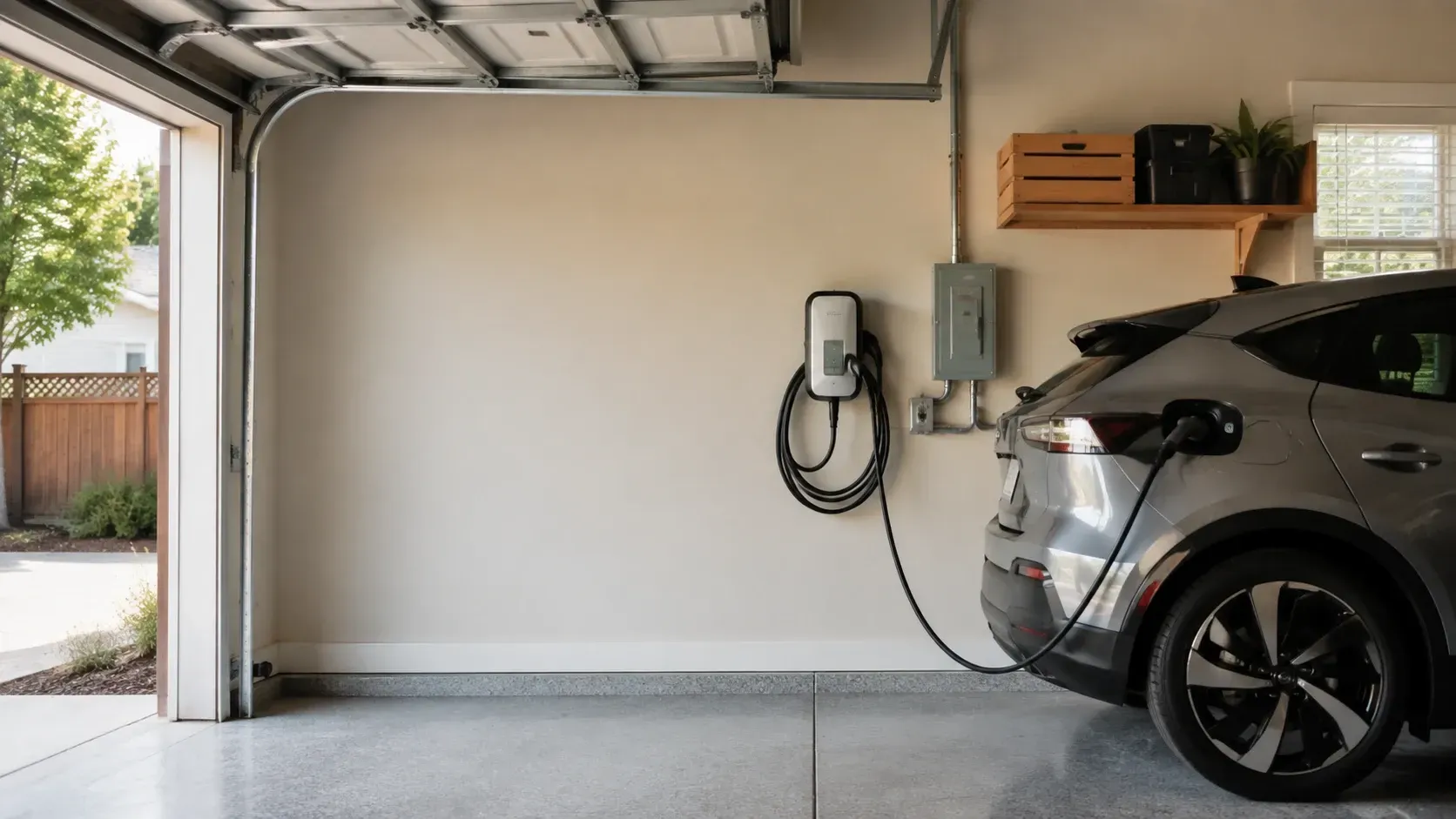
Where the EV charger will be installed can affect both the complexity and cost of the project. A straightforward installation on an accessible garage wall can involve very different requirements from placing charging equipment outdoors, in a carport, or at a detached garage.
Indoor installations may offer protection from the weather and convenient access to existing electrical pathways, but every garage is different. Finished walls, limited access, unusual construction, or other obstacles can make what initially appears to be a simple installation more involved.
Outdoor installations introduce different considerations. The charging equipment needs to be suitable for the environment, and mounting, wiring, conduit, and other electrical components may need to account for exposure to weather and the conditions at the installation location.
The way the charger will be used every day matters too. Its location should provide adequate cable reach to the vehicle's charging port without requiring the cable to be stretched awkwardly or routinely placed across walking areas. Thoughtful placement can reduce everyday tripping hazards while making it easier to connect and store the charging cable.
Detached garages, carports, and other parking areas away from the home can add further complexity. Depending on the property, providing power to the charging location may require exterior or underground electrical work, additional materials, and installation methods that would not be necessary for a charger mounted inside an attached garage.
The best location is therefore not determined by any single factor. Accessibility, weather exposure, parking habits, cable reach, safety, and the electrical work required to reach the location all need to be balanced. A location that works well both electrically and practically can make a meaningful difference in the scope of the installation and how convenient the charger is to use afterward.
Permits and Inspections Should Be Included in Planning.
Permits and inspections can be part of a Level 2 EV charger installation and should be considered when planning the overall project. Depending on the work involved and the authority having jurisdiction, permitting requirements may apply to a new charging circuit, 240-volt receptacle, hardwired charger, electrical panel work, or other electrical modifications.
The applicable process depends on where the property is located. Requirements can differ between the City of Sacramento, unincorporated Sacramento County, and surrounding communities, so a Sacramento-area address does not necessarily tell a homeowner which permitting authority applies. The requirements for the specific property should be verified before work begins.
When permits and inspections are required, they become part of both the project scope and its cost. Permit fees, application requirements, and inspection coordination can affect the installation timeline, and any required electrical work needs to be planned with the applicable permitting and inspection process in mind.
Because permit procedures and requirements can change, homeowners should rely on current information from the appropriate local authority rather than assumptions based on a previous project. Identifying those requirements during installation planning provides a clearer picture of the complete project and helps reduce avoidable surprises later.
See our Common Question on EV Charger Permits
Incentives May Help Offset Some EV Charging Costs.
Incentives, rebates, and other programs may help offset some of the costs associated with home EV charging equipment and installation. Availability can depend on factors such as the homeowner's utility provider, equipment selected, installation requirements, program eligibility, and whether funding is currently available.
Incentive programs can change over time, and application timing may be important. Some programs may have requirements that need to be satisfied before equipment is purchased or installation begins, so homeowners should review current program details before making decisions based on an expected incentive.
It is also useful to separate the potential incentive from the actual cost of the project. The installation should first be evaluated based on the electrical work, equipment, permitting, and site conditions involved. Any incentive for which the homeowner qualifies can then be considered when estimating the potential out-of-pocket cost.
An incentive may also affect equipment or installation choices if a program has specific eligibility requirements. Checking current options during the planning stage allows homeowners to consider those requirements without assuming that a particular rebate or credit will be available or that they will qualify for it.
See our Common Question on Sacramento EV charger incentives
Compare the Complete Installation, Not Just the Charger Price
When evaluating the cost of a home EV charger project, it is important to look at the complete installation rather than focusing only on the price of the charging equipment. The charger is just one component of a system that may also require a dedicated circuit, wiring, conduit, electrical components, permitting, and other work specific to the home.
Installation costs can differ because the work itself differs. One home may have adequate electrical capacity and a convenient charger location near the panel, while another may require a longer circuit route, outdoor electrical work, changes to the electrical system, or other site-specific work. Those differences can have a much greater effect on the project than the price of the charger alone.
When comparing installation options, homeowners should understand what work is actually included. The charger's electrical requirements, the condition and available capacity of the home's electrical system, circuit routing, charger location, and applicable permitting or inspection requirements can all affect the scope. A meaningful comparison therefore depends on whether the options being considered address the same installation needs.
The lowest initial price does not necessarily represent the same project at a lower cost. It may simply reflect a different scope of work. Looking at the complete installation—and understanding the electrical work, materials, and site conditions behind the cost—gives homeowners a much better basis for comparing options and deciding what is appropriate for their home.
Conclusion
The cost of installing a home EV charger in Sacramento depends on more than the price of the charging equipment. Electrical capacity, charger power, circuit routing, installation location, hardwired or plug-in configuration, permitting, and any additional electrical work can all influence the scope and cost of the project.
That is why a general installation price can only tell part of the story. Two homes may use similar charging equipment and still require very different electrical work. Understanding the home's existing electrical system, the planned charger location, and the homeowner's actual charging needs provides a much better foundation for estimating what an installation will involve.
The goal is not simply to install an EV charger at the lowest initial cost, but to plan a charging setup that works appropriately with the home and provides reliable, convenient charging for everyday use. Looking at the complete installation helps homeowners understand where the costs come from and make decisions based on what their particular project actually requires.
How Much Does It Cost to Install a Level 2 EV Charger?
Installation cost varies based on the home's electrical capacity, circuit requirements, charger location, and other electrical work needed. Evaluating the specific installation provides a more useful estimate than a general price range.
Does an Electrical Panel Upgrade Increase EV Charger Installation Cost?
Yes. If an electrical panel upgrade or other electrical improvements are needed to support EV charging, they can increase the scope and cost of the project. However, not every home requires a panel upgrade.
Is a Hardwired EV Charger More Expensive to Install?
Not necessarily. Hardwired and plug-in chargers have different installation requirements, and the overall cost depends on the electrical work, equipment requirements, charger location, and existing electrical system.
Does Distance From the Electrical Panel Affect Installation Cost?
It can. Longer or more difficult circuit routes may require additional wiring, conduit, materials, and labor. The accessibility and path between the electrical panel and charger can be as important as the distance itself.
Are There Incentives for EV Charger Installation in Sacramento?
EV charging incentives and programs may help offset eligible costs, but availability and requirements can change. Homeowners should review current programs and eligibility requirements when planning an installation.
Can I Get an Estimate Before Choosing an EV Charger?
An initial evaluation can help identify electrical capacity, installation location, and other project requirements before a final charger is selected. The charger's electrical requirements will still be needed for a complete installation plan.
Contact Us
Contact Us - Resources Install Cost
Planning a home EV charger installation in Sacramento?
The electrical system, charger location, circuit route, charging equipment, and other project requirements can all affect installation cost. Call to discuss your project and the factors that may influence the work required for your home.