EV Charger Installation Requirements for Sacramento Homes
What Sacramento Homeowners Should Know Before Installing a Level 2 EV Charger
Installing an EV charger at home is one of the most convenient ways to make electric vehicle ownership easier. Instead of relying only on public charging stations, homeowners can charge their vehicle overnight and start each day with a ready-to-go battery.
However, installing a home EV charger involves more than simply choosing a charger and mounting it on the garage wall. The installation needs to match your vehicle's charging needs, your home's electrical system, and the location where the charger will be installed.
For many Sacramento homeowners, a Level 2 EV charger is the preferred option because it provides faster charging than a standard 120-volt household outlet. Before installation begins, it is important to understand electrical capacity, charger requirements, placement options, and any permitting considerations that may apply.
Every home is different. Factors such as the age of the home, available electrical capacity, location of the electrical panel, and existing electrical loads can all affect the installation process. Understanding these requirements ahead of time helps homeowners make informed decisions and prepare for a successful EV charger installation.
Start by Understanding Your Daily Charging Needs
Before deciding what type of home charging setup you need, it helps to start with how you actually use your vehicle. Daily driving distance, how often you charge, how long the vehicle is typically parked at home, and the vehicle's charging capabilities can all influence the right approach.
Level 1 charging uses a typical 120-volt outlet (the standard household outlet found in most homes) and may be sufficient for some drivers with limited daily mileage or plenty of time between trips. Level 2 charging provides faster charging and is often a better fit for homeowners who drive more frequently, need to replenish more miles overnight, or simply want greater flexibility from home charging.
Even with Level 2 charging, more power is not automatically better. Chargers can operate at different power levels, and the vehicle itself limits how much AC charging power it can accept. A homeowner who routinely leaves an EV parked overnight may be able to meet everyday driving needs without installing the highest-powered charging configuration available.
Understanding those needs early helps guide the rest of the installation. The appropriate charging level can influence electrical capacity requirements, circuit planning, equipment selection, and even where the charger is installed. Starting with how the EV will actually be used creates a better foundation for the decisions that follow.
Level 2 EV Chargers Require Proper Electrical Capacity
Unlike Level 1 charging, a Level 2 EV charger requires a dedicated electrical circuit designed for the charger's power requirements. The amount of electrical capacity needed depends on the charging configuration, so the home's existing electrical system needs to be considered before the installation is planned.
Available capacity depends on more than the electrical panel's rating or whether there appears to be an open breaker position. Heating and cooling equipment, electric water heating, cooking appliances, clothes dryers, pool equipment, and other significant electrical loads all contribute to the demand already being placed on the home's electrical system.
The planned charging power matters as well. A higher-powered Level 2 configuration places greater demand on the electrical system than a lower-powered configuration. In some homes, the existing system may have sufficient capacity for the charging level the homeowner needs; in others, additional electrical work or another approach may need to be considered.
This is why electrical capacity should be evaluated as part of planning the installation rather than after a charger has been selected. Understanding what the home can support—and how that compares with the homeowner's actual charging needs—helps guide the circuit, charger, and installation decisions that follow.
Evaluating Your Electrical Panel Before Installation
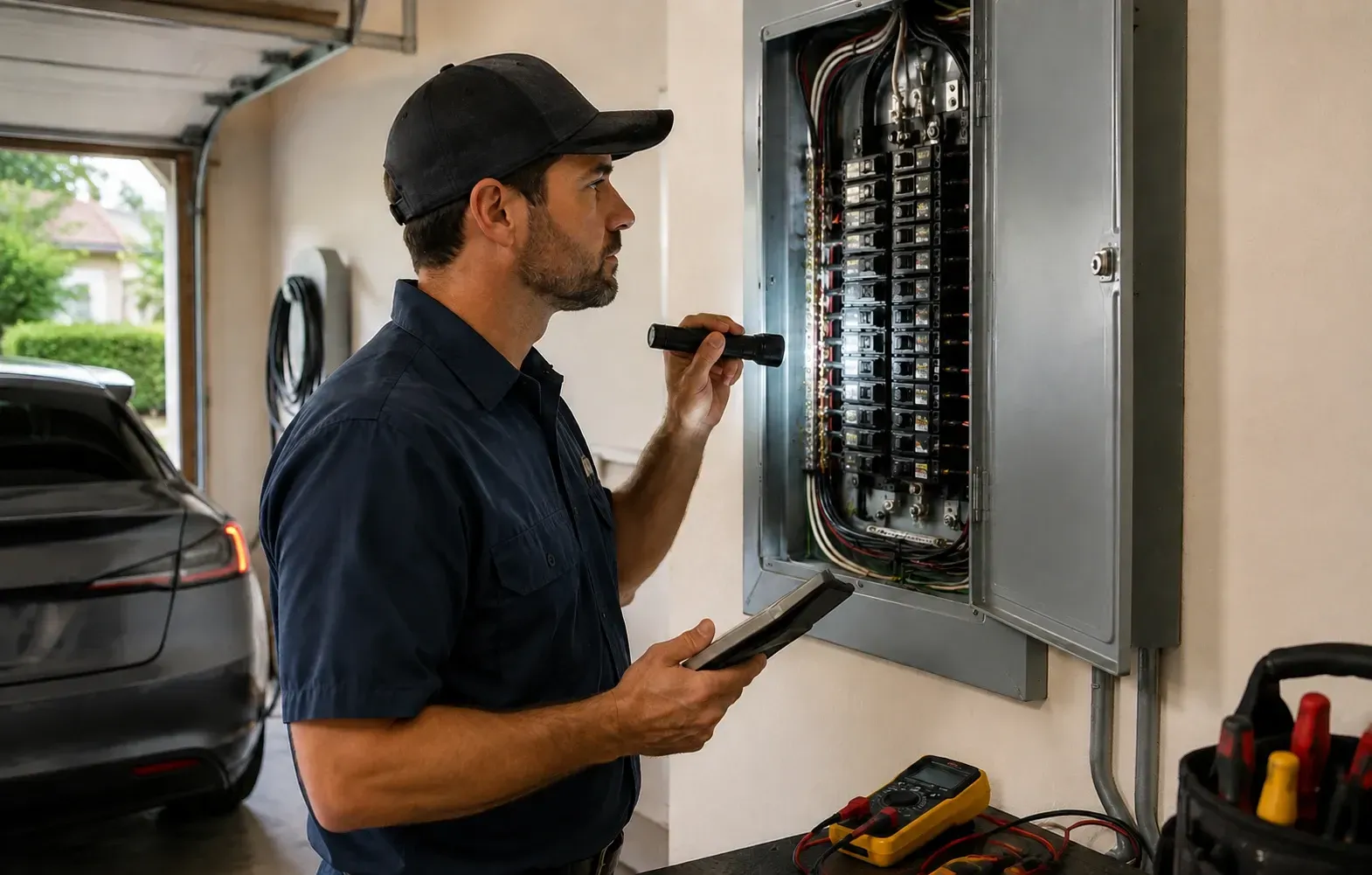
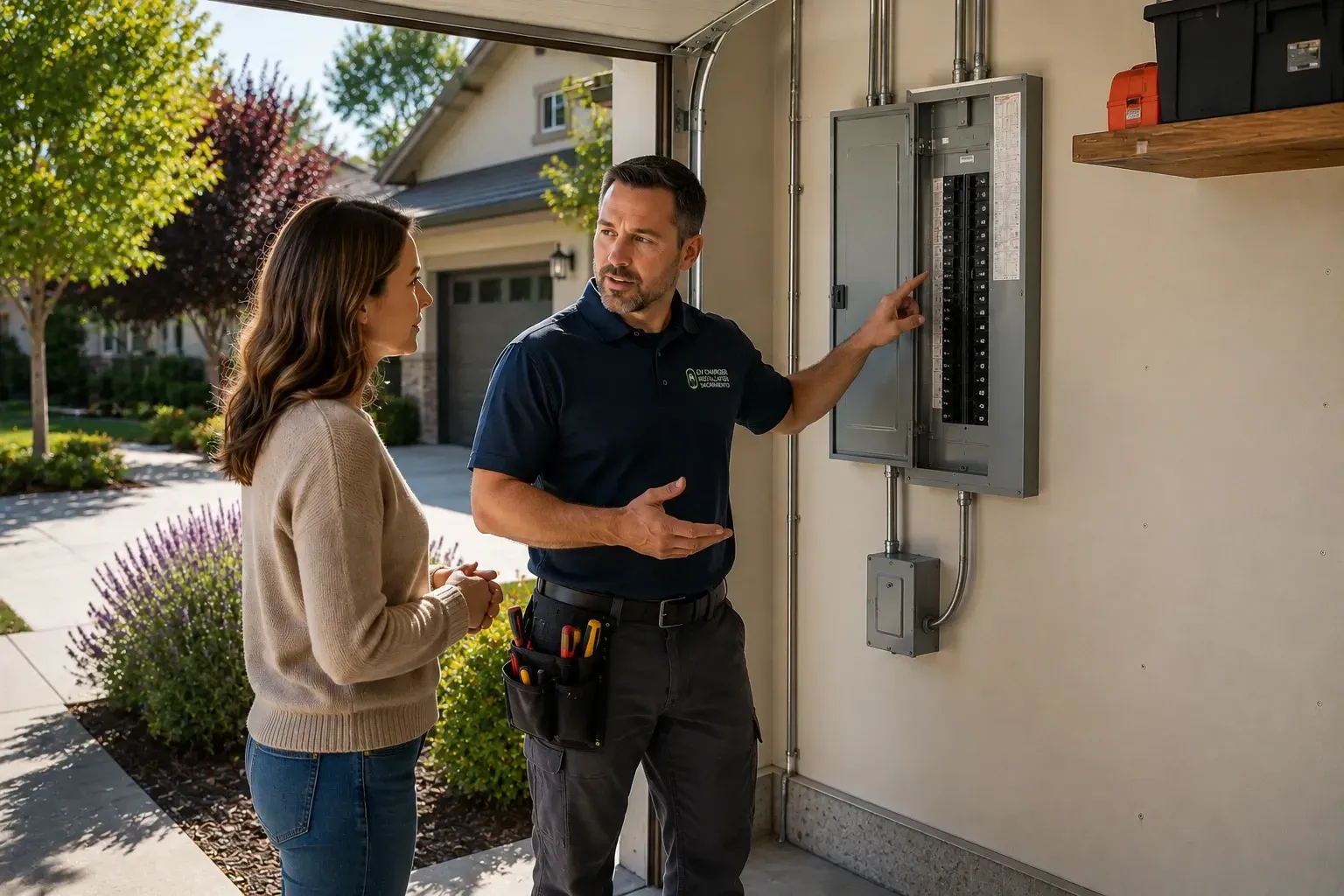
Before installing a Level 2 EV charger, it is important to understand whether your home's electrical system has enough available capacity to support the additional load. The electrical panel is a key part of this evaluation because it distributes power throughout the home and manages the circuits connected to appliances, lighting, and other electrical equipment.
Several factors can affect whether your existing panel can support an EV charger installation. These include the panel's overall capacity, available breaker space, the home's existing electrical demands, and the power requirements of the specific charger being installed.
Some newer homes may already have sufficient electrical capacity for a Level 2 charger. Other homes, particularly older properties or homes with significant electrical demands, may require additional evaluation before installation. In some cases, electrical improvements may be recommended to safely support the new charging equipment.
The goal is not simply to install the highest-powered charger available, but to create a charging solution that works safely and reliably with your home's electrical system. A proper evaluation helps determine the right approach and whether any updates are needed before installation begins.
Choosing the Right Location for Your EV Charger
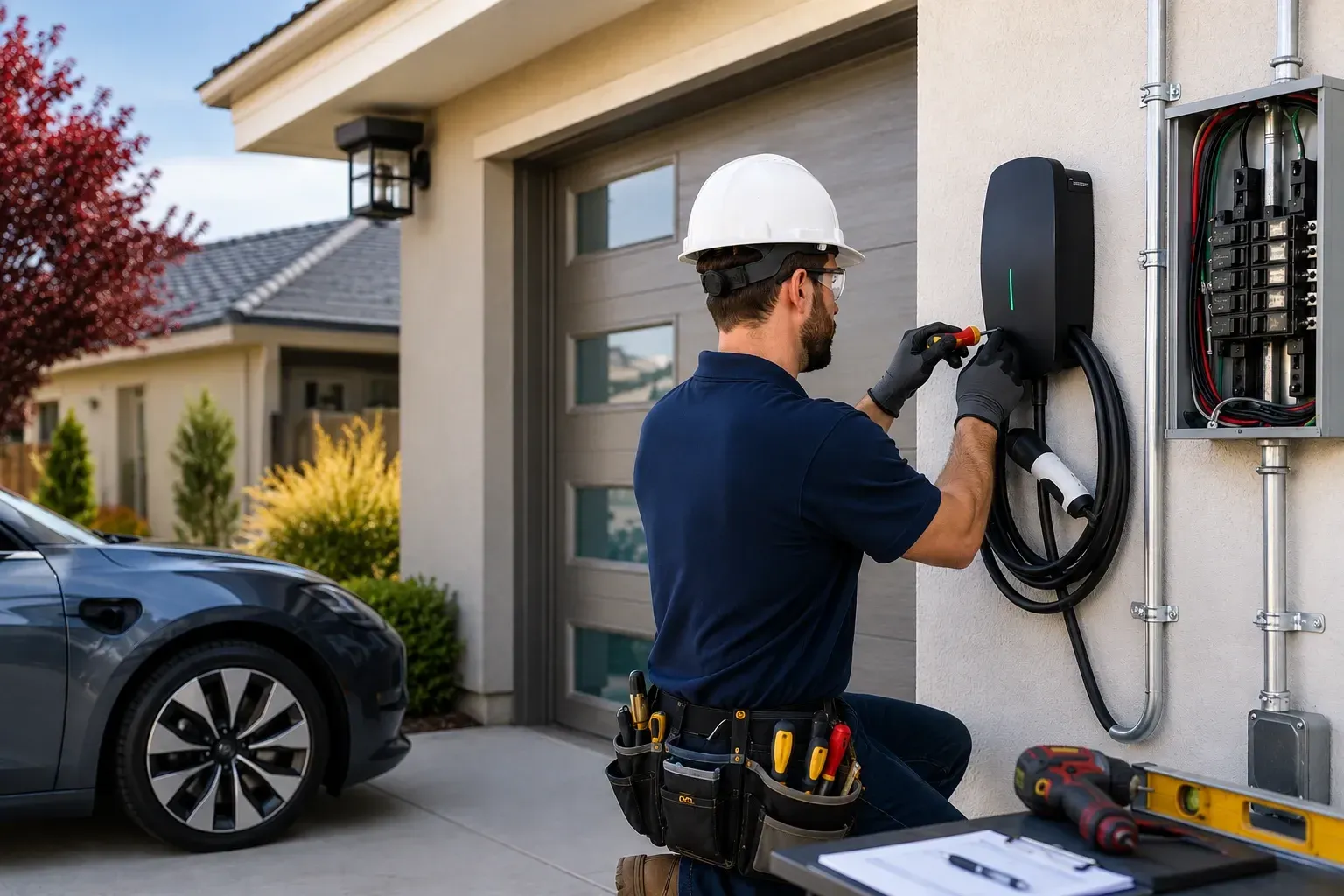
The location of your EV charger can have a significant impact on the convenience, safety, and overall installation requirements of your home charging setup. While many homeowners install their charger in a garage, other locations such as exterior walls, carports, or covered parking areas may also be possible depending on the home's layout and electrical configuration.
One of the first considerations is the distance between the charger location and the electrical panel. A shorter distance can often simplify the installation by reducing the amount of wiring and conduit needed. However, the best location is also the one that allows the vehicle to be parked comfortably while keeping the charging cable accessible.
For garage installations, homeowners should consider where the vehicle is normally parked, whether the charger can be mounted safely on the wall, and whether the cable will reach the vehicle's charging port without creating an obstruction. Proper placement can help reduce situations where charging cables cross walking paths, doorways, or other frequently used areas.
Safety and convenience should be considered together when planning charger placement. While charging cables are designed to be durable and flexible, a cable that regularly extends across a walkway or high-traffic area can become a tripping hazard. Choosing a location that keeps the cable organized and out of the way helps create a cleaner and safer charging environment.
Outdoor installations require additional considerations, including selecting equipment rated for exterior use and choosing a location that protects the charger from unnecessary exposure to weather conditions. Proper placement helps ensure the charger remains accessible while fitting naturally into the home's layout.
Taking time to plan the charger location before installation begins can help avoid changes later and create a setup that works well for both current and future electric vehicles.
Sacramento EV Charger Permitting and Installation Considerations
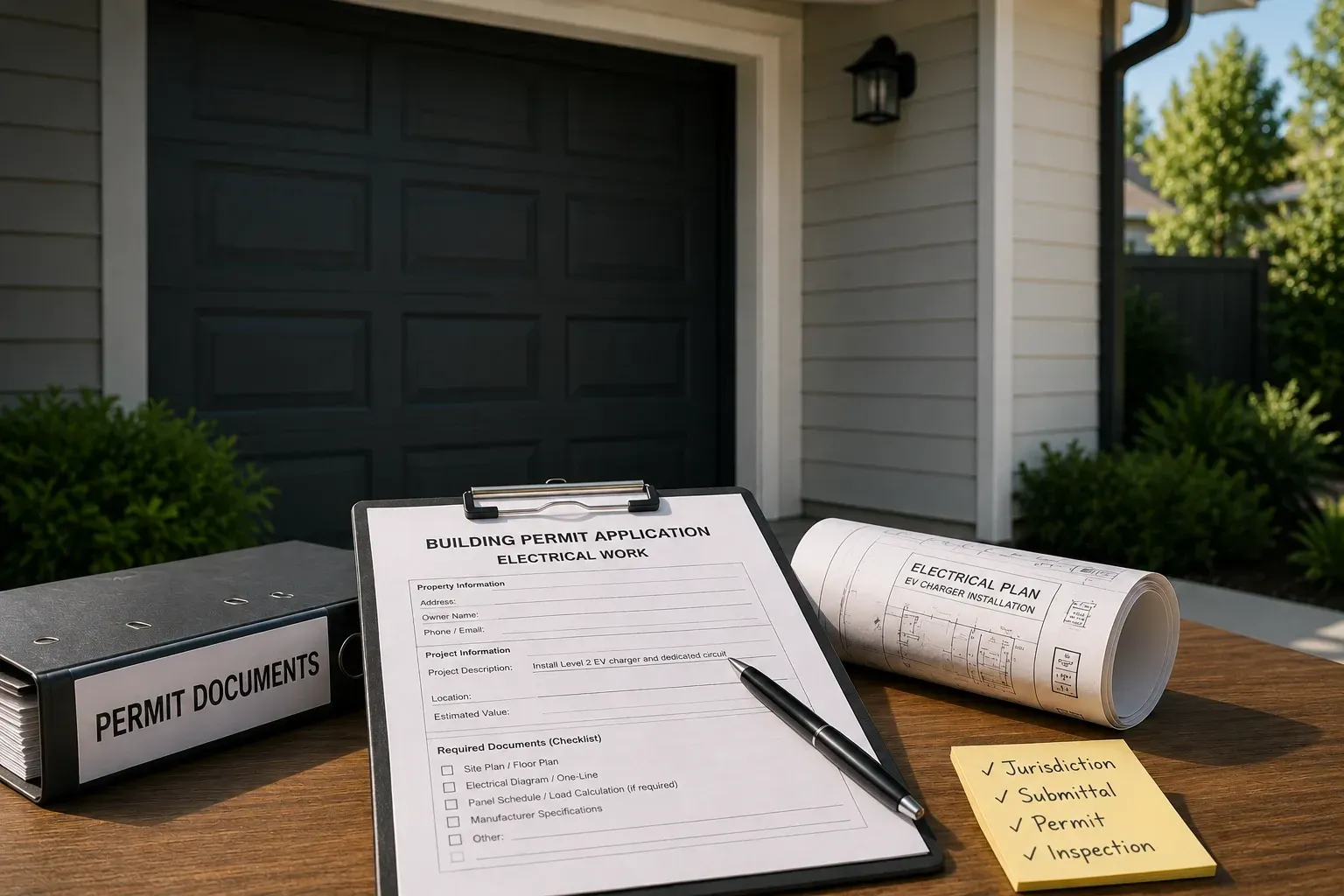
Permitting should be considered early when planning a Level 2 EV charger installation. Depending on the location and scope of the project, an electrical permit and inspection may be required by the local authority having jurisdiction. These requirements help ensure that the new charging circuit and related electrical work meet applicable safety and code requirements.
The installation itself involves more than simply mounting a charger and connecting it to power. Circuit sizing, wiring, overcurrent protection, equipment requirements, and the charger's installation instructions all need to be considered as part of the project. The specific requirements depend on the charging equipment and the electrical system serving the home.
An inspection may also be part of the permitting process. This provides an opportunity for the local jurisdiction to verify that the permitted electrical work was completed in accordance with applicable requirements before the project is considered complete.
Requirements can vary depending on where the home is located. A Sacramento mailing address does not necessarily mean that the City of Sacramento is the permitting authority; homes elsewhere in the Sacramento area may fall under Sacramento County or another local jurisdiction. Identifying the correct authority is therefore an important part of planning the project.
Permit procedures and electrical requirements can change over time, so homeowners should verify current requirements for their property rather than relying on outdated information. For more focused information, see our EV Charger Permits Sacramento guide.
Selecting the Right EV Charger for Your Home
Choosing an EV charger starts with the vehicle, but the fastest or most feature-rich charger is not automatically the best choice for every home. The vehicle's AC charging capability, the homeowner's daily charging needs, and the electrical system all help determine what type of Level 2 charger makes sense for the installation.
Charging power is one of the first considerations. A charger capable of delivering more power than the vehicle can accept will not make that vehicle charge faster. At the same time, homeowners who expect to change vehicles in the future may want to consider whether their charging equipment will continue to meet their needs without unnecessarily increasing the electrical demands of today's installation.
Homeowners may also choose between hardwired and plug-in Level 2 charging equipment. Each approach has its own installation requirements, and the appropriate choice can depend on the charger, installation location, electrical system, and how the equipment is expected to be used.
Features vary considerably between chargers as well. Wi-Fi connectivity, scheduling, energy monitoring, charging controls, and other smart features may be useful for some homeowners but unnecessary for others. The features that matter should reflect how the homeowner actually expects to use and manage charging.
The installation environment is another important consideration. Equipment installed outdoors or in other exposed locations needs to be suitable for that environment, while cable length, connector placement, and where the vehicle will normally be parked can affect everyday convenience and safety.
Charger selection and installation planning therefore work best when considered together. Choosing equipment based on the vehicle, charging needs, electrical system, and installation location can help avoid selecting a charger first and then discovering that its power requirements, features, or physical configuration are not a good fit for the home.
Conclusion
Installing an EV charger at home can make everyday EV ownership more convenient, but a successful installation starts with understanding what the home and vehicle actually require. Charging needs, available electrical capacity, charger power, equipment selection, and installation location all play a role in determining the right approach.
Because every home is different, there is no single installation plan that works for every property. The condition and configuration of the electrical system, the route for the new charging circuit, where the vehicle is normally parked, and applicable permitting requirements can all influence how the project should be planned.
Considering these factors together helps homeowners make informed decisions before installation begins. A well-planned charging setup should work appropriately with the home's electrical system while providing reliable, convenient charging where the vehicle is actually used.
Will My Electrical Panel Handle an EV Charger?
A Level 2 EV charger adds electrical demand to your home, so the available capacity of your electrical system should be evaluated before installation. Some homes may support charging without upgrades, while others may need electrical improvements.
Does EV Charger Installation Require a Permit in Sacramento?
Permit requirements can vary depending on the installation and electrical work involved. Understanding the applicable requirements before starting helps ensure the charger is installed safely and properly.
What Electrical Requirements Are Needed for a Level 2 EV Charger?
Level 2 chargers typically require a dedicated 240-volt circuit and proper electrical capacity. The exact requirements depend on the charger specifications and your home's existing electrical system.
Can an EV Charger Be Installed in a Garage or Outdoors?
Many EV chargers are installed in garages, but outdoor installations may also be possible with the right equipment and location planning. Proper placement helps keep charging convenient and safe.
Are EV Charger Incentives Available in Sacramento?
EV charger incentives and programs can change over time and may depend on eligibility requirements. Homeowners should review current programs to see what options may apply to their installation.
How Long Does Home EV Charger Installation Take?
Installation time depends on factors such as the charger location, electrical requirements, and whether upgrades are needed. A straightforward installation may be completed faster than a project requiring electrical modifications.
Contact Us
Contact Us - Resources Install Req
Planning a home EV charger installation in Sacramento?
Your vehicle, electrical system, charger location, and charging needs all help determine the right installation approach. Call to discuss your project and the considerations that may apply to your home.