Common EV Charger Installation Mistakes to Avoid
Plan Your Home EV Charger Installation Before Problems Become Permanent
A home EV charger can become something you use almost every day, so decisions made before installation can have a lasting effect on convenience, charging performance, and how well the equipment works with your home. Many problems associated with home charging are not caused by the charger itself, but by choices made while planning the project.
Some mistakes come from making assumptions about electrical capacity or charging power. Others involve equipment selection, charger location, cable reach, permitting, or incentive requirements. A decision that seems reasonable before installation can become inconvenient or unnecessarily limiting once the charger is being used regularly.
Sacramento homeowners can avoid many of these problems by considering the vehicle, electrical system, charging equipment, installation location, and applicable requirements as parts of the same project. Understanding the most common planning mistakes before work begins can help create a charging setup that works well from the start.
Choosing a Charger Before Understanding Your Charging Needs
One common planning mistake is purchasing an EV charger before determining what the vehicle and household actually need. Chargers are available with different power levels, connector types, cable lengths, smart features, and installation requirements, so selecting equipment based primarily on price, appearance, or maximum charging output can lead to a poor match.
The vehicle itself is a good place to start. EVs differ in how much AC charging power they can accept, and installing charging equipment capable of delivering more power than the vehicle can use will not make that vehicle charge any faster. Connector compatibility should also be confirmed before equipment is purchased.
Daily driving habits matter just as much as maximum charging capability. A vehicle that travels a relatively modest distance each day and remains parked at home overnight may have many hours available to replace the energy used during normal driving. That household may not need the highest charging output available to have the vehicle ready each morning.
Homeowners should also consider practical equipment features. Cable length, charger location, scheduling, energy monitoring, Wi-Fi connectivity, compatibility with other vehicles, and possible utility-program requirements may be more important to everyday use than maximum charging speed. The right combination depends on how and where the household expects to charge.
Understanding those needs before selecting the equipment allows the charger to become part of the overall installation plan rather than a purchase the electrical system must accommodate afterward. Starting with the vehicle, driving habits, charging location, and desired features can help homeowners choose equipment that fits both their everyday needs and their home.
Assuming the Highest Charging Output Is Always Better
It can be tempting to assume that the highest available charging output is automatically the best choice for a home EV charger. Faster charging can be useful, but higher output also places greater demand on the home's electrical system and may require a larger dedicated circuit than the household actually needs.
The vehicle itself may limit how much of that charging capacity can be used. An EV's onboard charger determines the maximum AC charging power the vehicle can accept, so installing charging equipment capable of delivering substantially more power will not increase the charging speed beyond the vehicle's own limit.
Maximum charging speed also needs to be considered in the context of how the vehicle is actually used. A homeowner who plugs in after returning home and leaves the vehicle connected overnight may have many hours available for charging. A lower charging output may still replace the energy used during a normal day well before the vehicle is needed again.
Choosing a higher charging output can also affect the electrical installation. Greater charging demand may require a higher-capacity circuit and consume more of the home's available electrical capacity. In some homes, selecting an appropriate lower charging output—or considering suitable load-management options—may provide practical everyday charging without designing the installation around the charger's maximum rating.
The better goal is to provide enough charging capacity for the vehicle and household, rather than automatically installing the highest output available. Matching charging power to daily driving needs, vehicle capability, available charging time, and the home's electrical system can result in an installation that performs just as effectively for everyday use without adding capacity simply because the charger can support it.
Confusing Breaker Space With Available Electrical Capacity
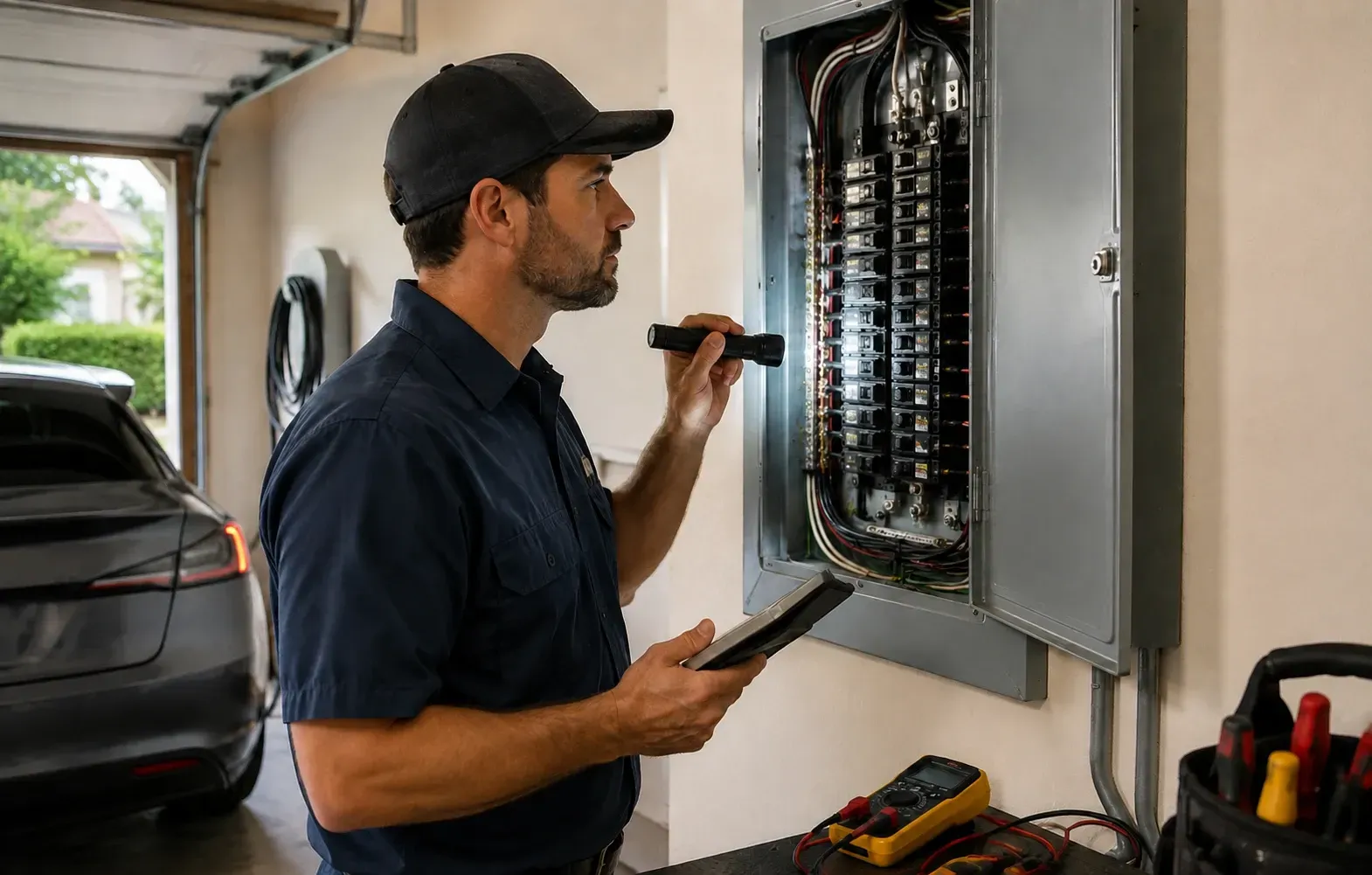
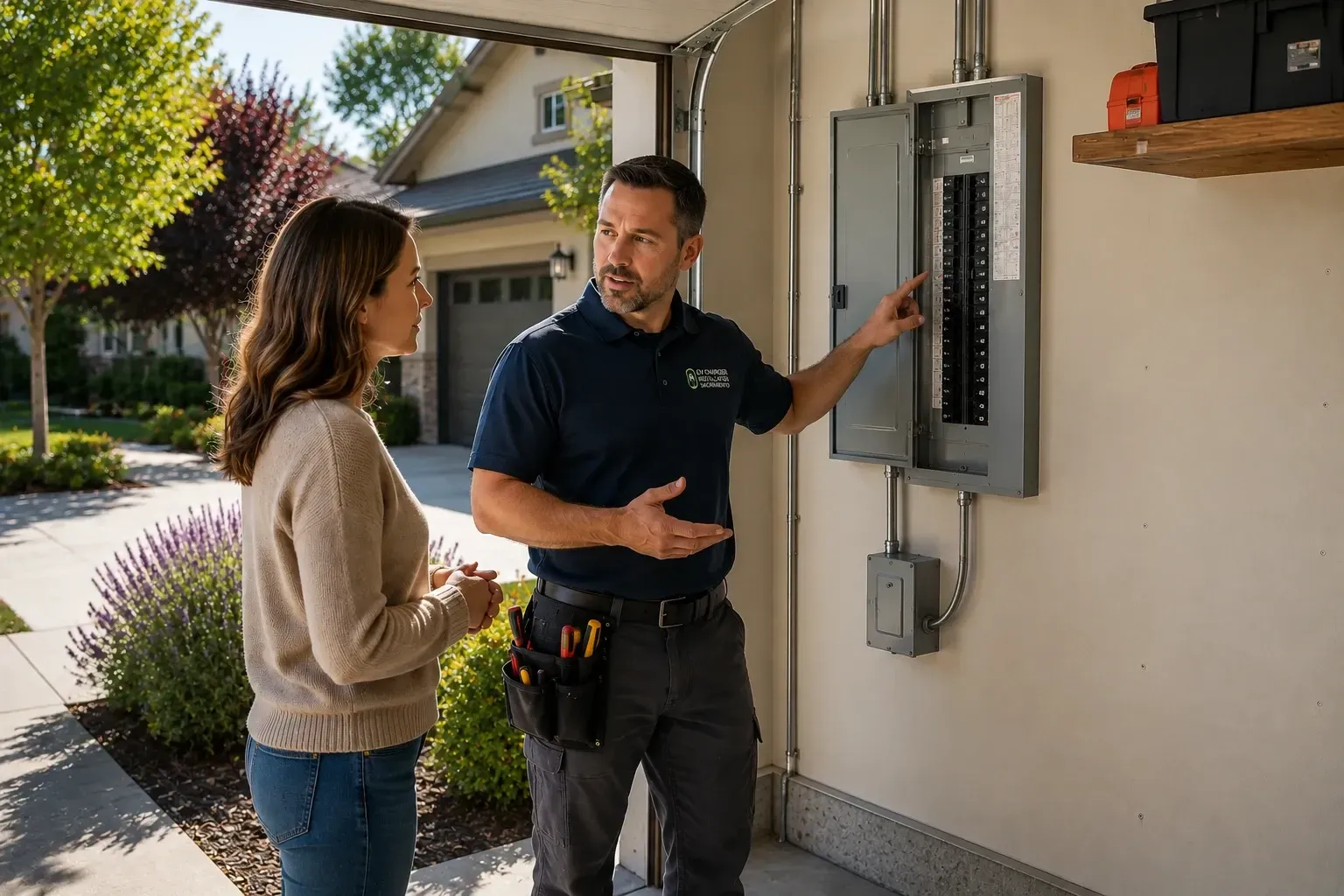
Seeing an unused breaker position in an electrical panel does not necessarily mean the home has enough electrical capacity for an EV charger. Breaker space refers to whether the panel can physically accommodate another circuit breaker, while available electrical capacity relates to how much additional electrical load the home's service can support.
A panel may have several unused breaker positions while the home already has substantial electrical demand from heating and cooling equipment, electric cooking, water heating, clothes dryers, pools, spas, or other large loads. Conversely, a panel that appears crowded may present a different set of considerations. Looking at the number of open spaces alone does not answer the capacity question.
EV charging is particularly important to evaluate because it can represent a significant electrical load that may operate for several hours at a time. The desired charging output, existing household loads, electrical-service capacity, and other characteristics of the home's electrical system need to be considered when determining how much charging load can appropriately be added.
This is also why assuming that an EV charger automatically requires an electrical-panel upgrade can be just as misleading as assuming an open breaker space means everything is fine. Depending on the home and charging needs, possible approaches may include an appropriately sized charging circuit, a lower charging output, load-management equipment, or additional electrical work. The appropriate solution depends on the particular electrical system.
Homeowners should therefore treat breaker space and electrical capacity as two separate considerations when planning an EV charger installation. Determining both before selecting the final charging configuration can help avoid purchasing equipment or planning a charging output that does not fit the home's electrical system.
Assuming an Existing 240-Volt Circuit Is Ready for EV Charging
Finding an existing 240-volt circuit in the garage can make EV charging seem straightforward. A homeowner may see an unused receptacle or a circuit previously used for a dryer, workshop equipment, or another appliance and assume that an EV charger can simply be connected to it. The existing circuit may be useful, but its presence alone does not establish that it is appropriate for EV charging.
The circuit needs to be evaluated for the charging equipment that will use it. Circuit rating, conductor size, receptacle type and condition, grounding, whether the circuit serves other equipment, and the charger's electrical requirements can all affect whether an existing circuit is suitable for the planned installation.
EV charging also differs from many household uses because the vehicle may draw substantial power continuously for several hours. The charger's allowable output therefore needs to correspond to the capacity of the circuit supplying it. A receptacle that physically accepts a charger's plug does not by itself establish that the entire circuit is appropriate for that charging load.
The type of charging equipment matters as well. Some Level 2 chargers are designed for a plug-in installation using an appropriate receptacle, while others require a hardwired connection. A homeowner who already has a 240-volt receptacle should therefore confirm the installation requirements of the charger being considered rather than choosing equipment based solely on the receptacle that happens to be available.
An existing 240-volt circuit can potentially simplify a home charging project when it is appropriate for the intended equipment and charging load. Having the circuit evaluated before relying on it can help determine whether it can be used as-is, whether a different charging configuration is appropriate, or whether additional electrical work is needed.
Choosing the Charger Location Based Only on Installation Convenience
Placing an EV charger wherever the electrical installation appears easiest can create problems with everyday use. A location close to the electrical panel may provide a short and straightforward circuit route, but that does not necessarily make it the best place for the charging equipment.
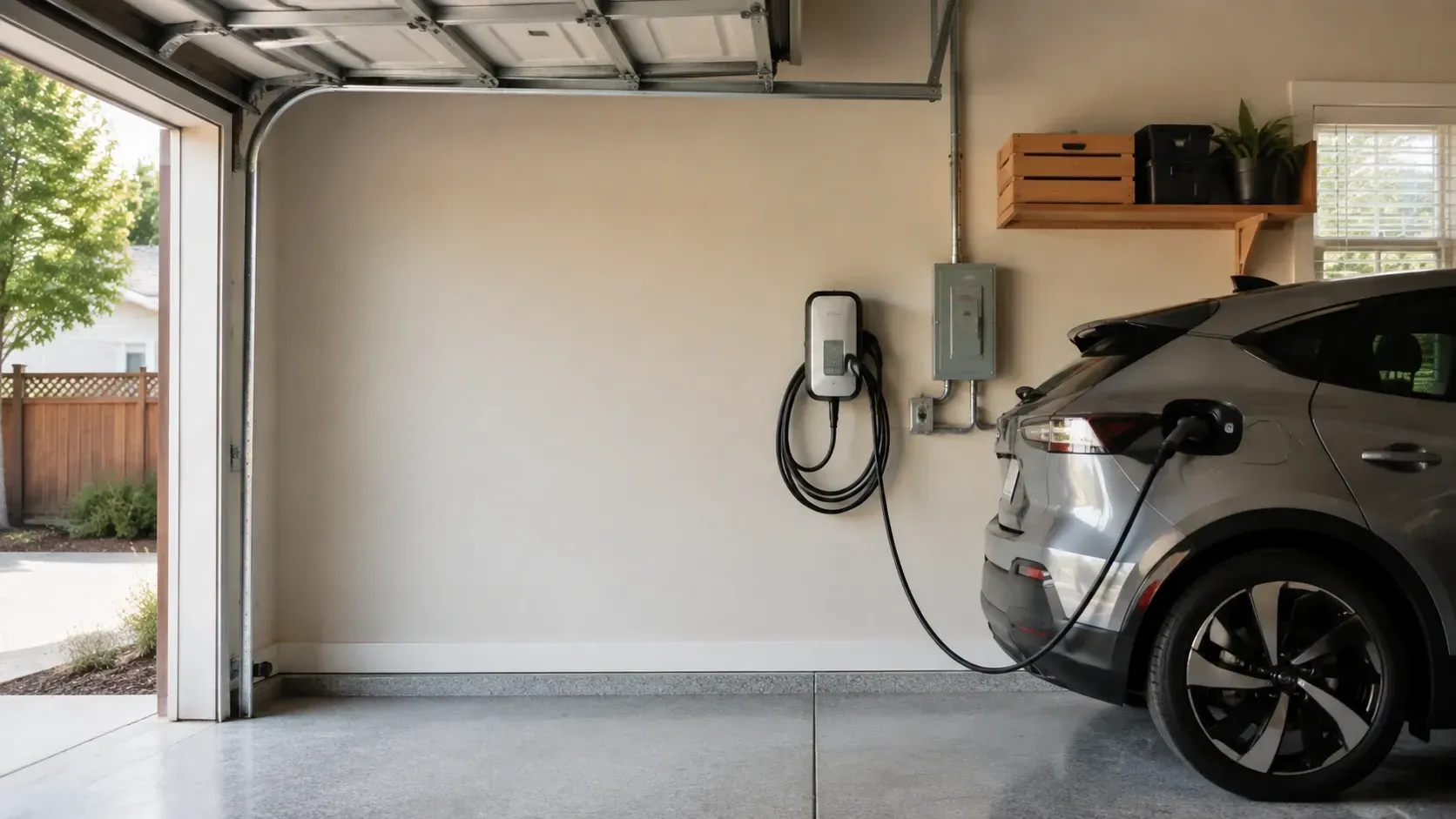
The vehicle's normal parking position and charging-port location should be considered along with the electrical route. If the charger is positioned poorly, the homeowner may need to stretch the cable around the vehicle, park differently to reach the charging port, or routinely move around the cable while the vehicle is charging.
This is especially important when the EV normally parks in the driveway rather than inside the garage. A charger installed in the most convenient location for the electrical work may provide poor access to a driveway-parked vehicle or require the charging cable to follow an awkward route through the garage opening.
Available wall space and normal garage use matter as well. Doors, shelving, storage cabinets, workbenches, walking paths, and other vehicles can all affect whether a location that looks convenient during installation will remain convenient afterward. The charger should fit into the way the household actually uses the garage or driveway.
Electrical-panel location and circuit routing are important considerations, but they should be balanced with cable reach, vehicle position, accessibility, and everyday use. Comparing several possible locations before installation begins can help avoid choosing the easiest place to install the charger at the expense of having a better place to use it.
Learn More About Choosing the Best Location for a Home EV Charger
Ignoring the Charging Cable During Location Planning
The charging cable is easy to overlook when choosing where to install an EV charger, but it can have a major effect on everyday convenience. A charger may be mounted in an accessible location while still being difficult to use if the cable does not comfortably reach the vehicle's charging port from its normal parking position.
Cable length should be considered using the actual charging equipment being installed rather than assuming every charger provides the same reach. The cable should have enough flexibility to connect without routinely being stretched tight, and the arrangement should tolerate normal differences in how far forward, backward, or to one side the vehicle is parked.
The route the cable follows while charging matters as well. A cable that regularly crosses a walking path can become a trip hazard, while one routed through an active parking area may be exposed to being driven over. For vehicles normally charged in the driveway, homeowners should consider the entire route from the charger to the vehicle, including how the cable passes through or around the garage opening.
Homeowners should also consider where the cable and connector will go when the vehicle is not charging. A practical location should make it easy to return the connector to its holder and store the cable neatly rather than leaving it on the garage floor, hanging across storage areas, or interfering with doors and other equipment.
Thinking through the complete cable path before the charger is installed can reveal problems that are not obvious from looking at the wall location alone. The charger, cable, vehicle, and normal movement through the garage or driveway should work together as a system rather than treating cable management as something to figure out after installation.
Buying Equipment Before Checking Incentive Requirements
Purchasing an EV charger before checking available utility incentives can result in a homeowner selecting equipment that does not qualify for a program they expected to use. Incentive programs may have specific requirements for charger models, charging output, circuit size, installation methods, contractors, application timing, or other parts of the project.
For Sacramento homeowners served by SMUD, the current Charge@Home program is a good example. SMUD maintains requirements for eligible charging equipment and a qualified-product list, so a charger that is perfectly suitable for home EV charging does not necessarily qualify for the available equipment incentive.
The same distinction can apply to the electrical installation. An installation may be electrically appropriate for the home while differing from the requirements of a particular incentive program. Homeowners interested in rebates should therefore understand both the electrical needs of the project and the program requirements before equipment is purchased or installation decisions are finalized.
Utility incentives can also change over time. Eligible products, rebate amounts, installation requirements, available funding, and application procedures may be revised, so an older article, product listing, or previous homeowner's experience should not be treated as confirmation that a current project will qualify.
Checking current incentive requirements early allows homeowners to decide how much those incentives should influence their equipment and installation choices. The better sequence is to review the current program, understand its requirements, confirm equipment eligibility, and then make the purchase rather than discovering afterward that an otherwise suitable charger does not qualify.
Learn More About SMUD EV Charging Programs and Incentives
Waiting Until After Installation to Think About Permits and Inspection
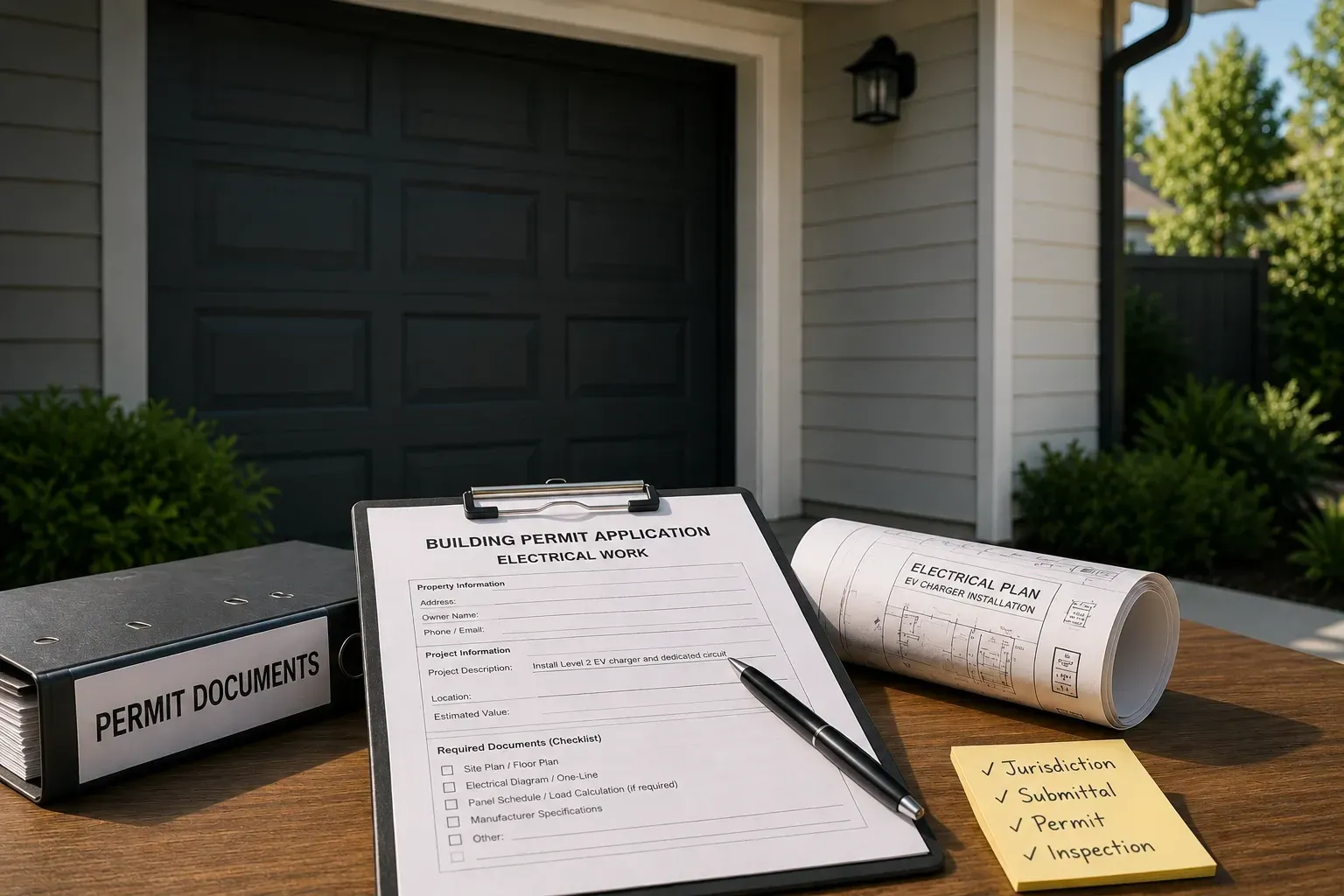
Permit and inspection requirements should be considered before EV charger installation work begins. Waiting until the charger and electrical circuit have already been installed can create unnecessary complications if the work required a permit or if the local jurisdiction has requirements that should have been addressed earlier in the project.
The applicable requirements depend on which jurisdiction has authority over the property and the scope of the electrical work being performed. A Sacramento mailing address does not necessarily mean the property is within the City of Sacramento, so homeowners should identify the appropriate permitting authority rather than assuming the same process applies throughout the area.
Permit applications may require information about the charging equipment, electrical circuit, panel, and other aspects of the planned installation. If additional electrical work is needed to support the charger, that work may also affect the permit and inspection requirements. Understanding what information is needed before work begins allows those requirements to become part of the installation plan.
Inspection should also be included when thinking about the project timeline. Where an inspection is required, the physical installation of the charger is not necessarily the final project step. The completed permitted work may need to be inspected to verify that it conforms to the approved project and applicable electrical requirements.
Checking permit and inspection requirements at the beginning of the project helps avoid trying to address them after the fact. Homeowners can identify the correct jurisdiction, understand the process, and plan the electrical work accordingly rather than discovering after installation that additional steps are required.
Learn More About EV Charger Permits in Sacramento
Forgetting About Setup, Testing and Everyday Use
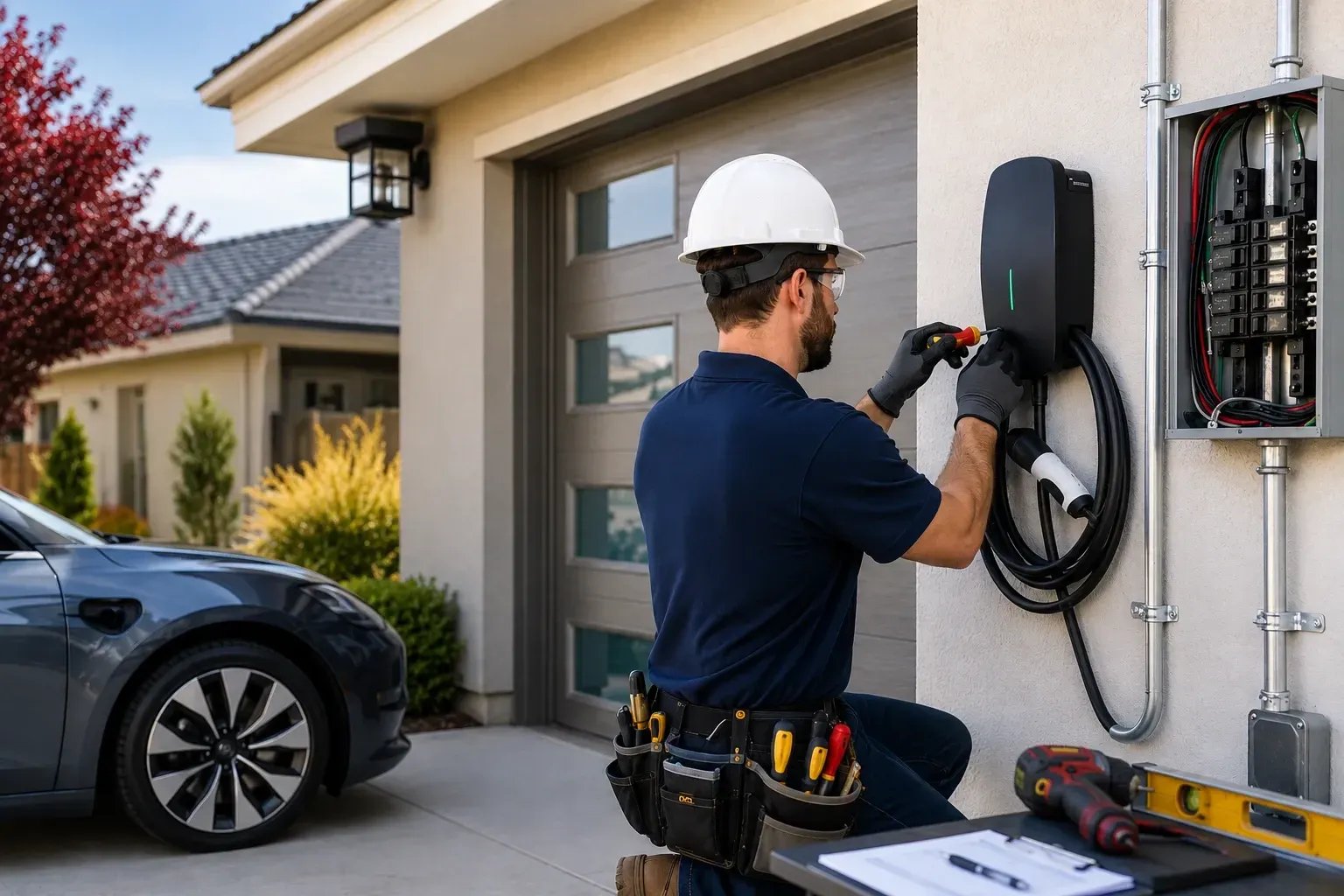
An EV charger installation is not necessarily complete simply because the equipment is mounted on the wall and electrical power is available. Depending on the charger, additional configuration and testing may be needed before the equipment is ready for normal everyday use.
Some chargers require settings that correspond to the electrical circuit supplying them, such as the maximum allowable charging output. Smart chargers may also include Wi-Fi connectivity, mobile-app registration, charging schedules, energy monitoring, and other connected features. Homeowners should understand how the charger receives software or firmware updates and keep any companion mobile app reasonably current so that available fixes, compatibility updates, and features can be applied.
The charger should also be tested with the vehicle that will normally use it. Confirming that charging begins properly, the vehicle recognizes the equipment, and the expected charging rate is available can help identify configuration or compatibility issues before the installation is considered finished.
Everyday usability deserves a final check as well. The homeowner should be comfortable connecting and disconnecting the vehicle, storing the cable and connector, recognizing the charger's normal status indicators, and understanding any schedules or charging limits that have been configured. They should also know whether charger updates occur automatically or require action through the manufacturer's app or other setup process. A technically complete installation can still be frustrating if the homeowner is unsure how the equipment is intended to operate.
Taking a few minutes to verify charging operation and understand the equipment helps complete the transition from installation project to everyday home charging. The goal is not simply to leave the charger with power, but to leave the homeowner with a charging setup that is configured, tested, and ready to use.
Conclusion
Many common EV charger installation problems can be avoided by making the right decisions before electrical work begins. Understanding the vehicle's charging needs, the home's available electrical capacity, the charging equipment, and how the charger will be used can help homeowners avoid choices that create unnecessary limitations or inconvenience later.
Good planning also extends beyond the electrical circuit itself. Charger location, cable reach, incentive requirements, permits and inspections, equipment configuration, software updates, and final testing all contribute to a complete home charging setup. Considering these factors together can help prevent one decision from creating problems elsewhere in the project.
A home EV charger may be used hundreds of times each year and remain in place through years of vehicle ownership. Taking the time to plan the installation around the home, vehicle, and household's actual charging needs can result in a setup that is practical, properly configured, and convenient to use long after the installation is complete.
Do I need the highest-powered EV charger my home can support?
Not necessarily. The appropriate charging output depends on the vehicle's AC charging capability, daily driving needs, available charging time, and the home's electrical capacity. More charging power provides little benefit if the vehicle or household does not need it.
Does an open breaker space mean my electrical panel can support an EV charger?
No. An open breaker position means there may be physical space for another circuit, but it does not establish that the home has enough electrical capacity for the additional charging load. Breaker space and available electrical capacity are separate considerations.
Can I use an existing 240-volt outlet for EV charging?
Possibly, but the existing circuit and receptacle should be evaluated for the charging equipment and intended load. Circuit rating, wiring, receptacle condition, dedicated use, and the charger's requirements can all affect whether the existing installation is suitable.
Should an EV charger be installed as close to the electrical panel as possible?
Not always. A shorter circuit route may simplify the electrical installation, but charger placement should also account for where the vehicle parks, charging-port location, cable reach, walking and driving paths, and everyday convenience.
Should I buy an EV charger before checking for available rebates?
It's better to check current incentive requirements first if rebates are part of your planning. Utility programs may require specific charging equipment, circuit configurations, installation conditions, or application procedures, and an otherwise suitable charger may not qualify.
Is an EV charger installation finished once the charger has power?
Not necessarily. The charger should be properly configured and tested with the vehicle, and smart chargers may also require Wi-Fi, app setup, charging schedules, or software and firmware updates. Homeowners should understand the equipment's basic operation before considering the project complete.
Contact Us
Contact Us - Resources Level 2 Guide
Planning a home EV charger installation in Sacramento?
Considering your vehicle, electrical capacity, charging equipment, charger location, and project requirements before work begins can help avoid common installation mistakes. Call to discuss your project and the charging setup that may work best for your home.