EV Charger Installation Sacramento
Do I Need a Permit for My EV Charger in Sacramento, and Who Handles It?
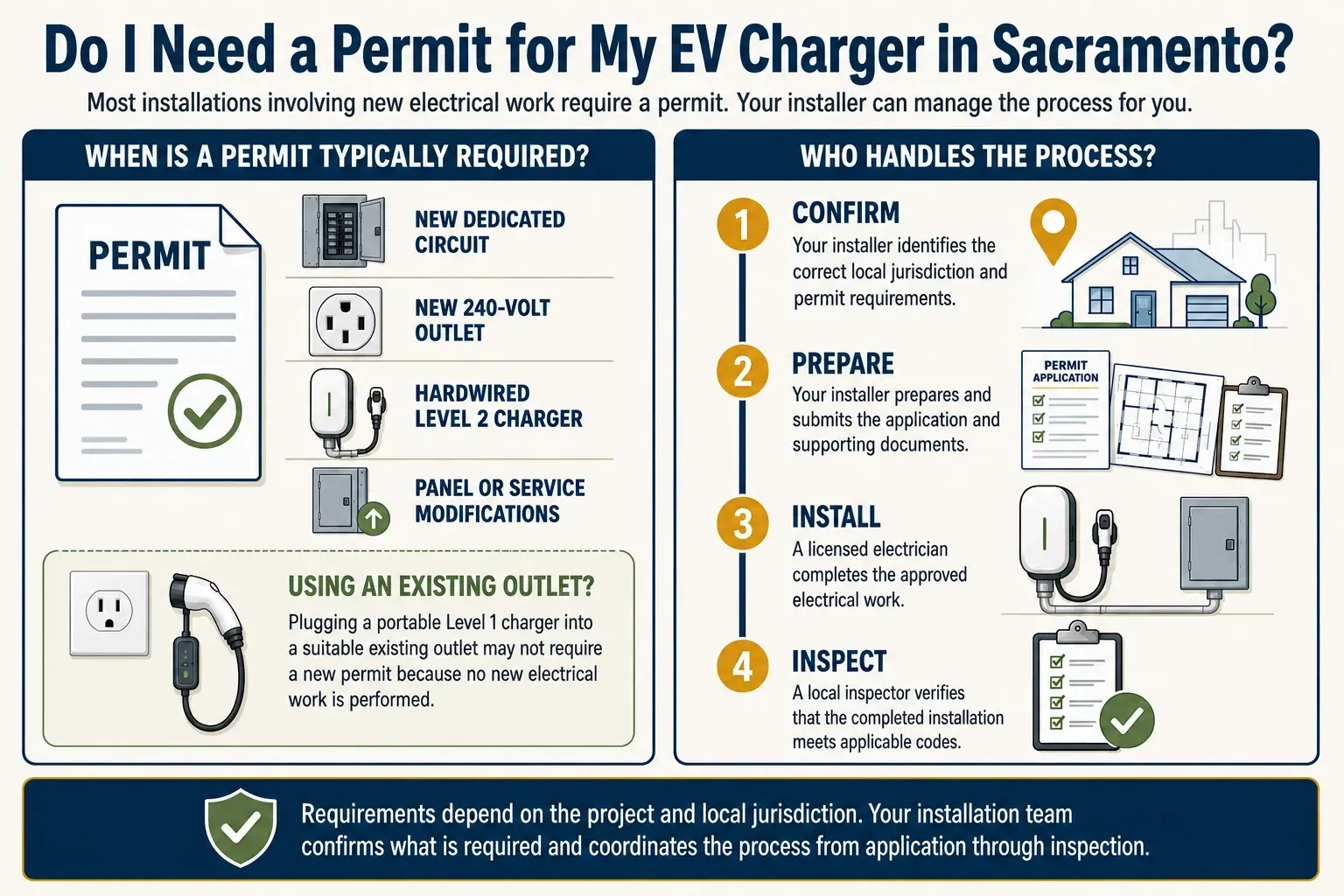
Most Sacramento home EV charger projects that involve a new dedicated circuit, 240-volt outlet, hardwired charger, or electrical panel work require a permit. Simply plugging a portable Level 1 charger into a suitable existing outlet generally does not involve new electrical work. Because requirements depend on the project and local jurisdiction, permit needs should always be confirmed before installation begins.
When Is an EV Charger Permit Typically Required?
A permit is generally required when an electrician adds or modifies permanent electrical wiring for an EV charger. This allows the local building department to review the planned work and verify that the circuit, wiring, equipment, and electrical panel can support the charger safely.
Common projects that typically require permitting include:
- Installing a new dedicated 120-volt circuit for Level 1 charging
- Installing a new 240-volt circuit or receptacle
- Hardwiring a Level 2 EV charger
- Replacing or upgrading an electrical panel
- Adding load-management equipment
- Modifying existing wiring or electrical service
Using a portable Level 1 charger with an appropriate existing outlet may not require a new permit because no new electrical work is being performed. The outlet and circuit should still be evaluated if there is any question about their condition or suitability for continuous EV charging.
Who Handles the Permit Process?
For a professionally managed installation, the homeowner should not have to determine which forms, plans, or supporting documents the local jurisdiction requires.
The installation team typically:
- Confirms which jurisdiction governs the property
- Determines the permit requirements for the proposed installation
- Prepares the application and supporting electrical information
- Submits the permit documents
- Responds to questions from the permitting authority
- Coordinates the required inspection
- Addresses any corrections if they are requested
The exact process can differ between the City of Sacramento, unincorporated Sacramento County, and neighboring communities. Identifying the correct permitting authority at the beginning helps prevent applications from being submitted to the wrong jurisdiction.
What This Means for Your Home
Permits protect homeowners by requiring permanent electrical work to meet current safety and electrical-code requirements. The review may include the charger’s electrical demand, circuit and conductor sizes, breaker protection, panel capacity, equipment specifications, and installation location.
When an inspection is required, an inspector verifies that the completed work corresponds with the approved plan and meets applicable requirements. This provides added confidence that the charger is safe for regular, long-duration use.
Although permitting adds a step to the project, it is a routine part of professional EV charger installation. Proper planning and complete documentation help keep the process moving from application through final approval.
Why Permitting Matters
A properly permitted and inspected installation helps:
- Protect your home and electrical system
- Confirm that wiring and overcurrent protection are correctly sized
- Verify that the charger is installed according to its specifications
- Document completed electrical improvements
- Reduce complications during a future home sale
- Support safe and reliable charging over the life of the equipment
Contact Us
Contact Us - sacramento-permits
Let Us Handle the Details
From evaluating your electrical system to coordinating permits and inspections, we’ll help make your Sacramento home EV charger installation straightforward.